
Welcome to Costa Rica
COSTA RICA EXCHANGE RATE
Exploring Costa Rica's Currency: Beautiful Banknotes Explained
Costa Rica’s banknotes are indeed renowned for their striking beauty. The country’s currency, the Costa Rican colón, features vibrant designs that celebrate the nation’s rich biodiversity and cultural heritage. Each bill showcases iconic flora, fauna, and landmarks, such as rainforests, marine life, and historical figures. These visually stunning banknotes not only serve as a means of exchange but also as artistic representations of Costa Rica’s natural and cultural splendor.

The 1000 ($2 approx) colones bill showcases the portrait of Braulio Carrillo, a significant figure in Costa Rican history who served as the Head of State in the 19th century.
On the reverse side, the bill depicts the captivating imagery of the dry forest, an integral part of Costa Rica’s diverse ecosystems. Within this landscape, a white-tailed deer gracefully stands, symbolizing the rich biodiversity found within the country’s natural habitats. Additionally, the bill highlights the iconic Guanacaste tree, a symbol of national pride and cultural heritage in Costa Rica.
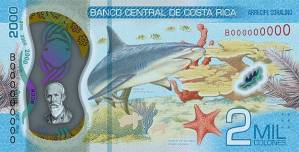
The new 2000 ($4 approx) colones bill of Costa Rica showcases a harmonious blend of cultural and natural elements that embody the essence of the country. On the obverse side, it features the portrait of Mauro Fernández Acuña, a distinguished figure in Costa Rican literature and education.
On the reverse side, the bill depicts the mesmerizing beauty of a coral reef, highlighting the intricate and vibrant ecosystem found off the shores of Costa Rica. Within this marine habitat, the imposing figure of a bull shark gracefully glides, representing the rich biodiversity of Costa Rica’s coastal waters
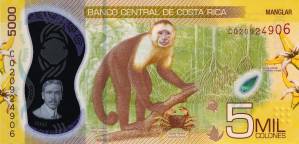
The new 5000 ($10 approx) colones bill of Costa Rica elegantly combines elements of history and nature, embodying the essence of the country’s heritage. On the front side, it proudly features the portrait of Alfredo González Flores, a revered figure in Costa Rican history known for his contributions to education and public service
On the reverse side, the bill showcases the serene beauty of a mangrove forest, a vital coastal ecosystem found along Costa Rica’s shores. Within this lush habitat, the charming figure of a white-faced capuchin monkey adorns the scene, symbolizing the rich biodiversity and abundant wildlife that inhabit Costa Rica’s mangrove forests
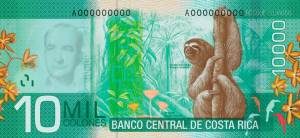
Costa Rica’s new 10,000 ($20 approx) colones banknote features an impressive combination of elements that highlight the country’s historical and natural wealth. On the obverse, the figure of President José Figueres Ferrer stands out.
On the other hand, the back of the banknote features an image of the three-toed sloth, one of the most emblematic and beloved creatures of the Costa Rican rainforest. This animal represents Costa Rica’s unique biodiversity and its commitment to environmental conservation.

The new 20,000 ($40 approx) colones bill of Costa Rica beautifully blends cultural heritage with natural beauty, encapsulating the essence of the country’s rich diversity. On the obverse side, it proudly features the portrait of Carmen Lyra, the pen name of María Isabel Carvajal, a revered Costa Rican writer, educator, and social activist
On the reverse side, the bill depicts the breathtaking scenery of a Costa Rican paramo, a unique high-altitude ecosystem characterized by its misty landscapes and abundant biodiversity. Here, the graceful silhouette of a hummingbird, specifically a colibrí, graces the scene, symbolizing the delicate beauty and resilience of Costa Rica’s avian species.

The new 50,000 ($100 approx) colones bill of Costa Rica elegantly celebrates both literary greatness and ecological wonders, reflecting the country’s commitment to culture and conservation. On the front side, it proudly showcases the portrait of Gabriel García Márquez, the acclaimed Colombian writer and Nobel laureate whose literary works have left an indelible mark on literature worldwide.
On the reverse side, the bill immerses the viewer in the ethereal beauty of a Costa Rica.
Important information for tourists, expatriates and investors in Costa Rica
For Tourists:
- Currency: The Costa Rican colón (CRC) is the official currency, but US dollars are widely accepted, especially in tourist areas.
- Cost of Living: Costa Rica is generally more affordable than many Western countries, but prices can vary. Tourist hotspots like San José, Manuel Antonio, and Tamarindo tend to be pricier.
- Tourist Services: The country offers a range of accommodation options from budget hostels to luxury resorts. Dining and activities are available at various price points, making it accessible to different budgets.
- Tipping: Tipping is appreciated but not mandatory. In restaurants, a 10% service charge is often included in the bill.
For Expatriates:
- Cost of Living: Varies depending on location. Coastal areas and popular expat destinations may be more expensive. Rural areas offer a lower cost of living.
- Healthcare: Costa Rica has a robust healthcare system. The public system (Caja) is available to residents, and private healthcare is also of high quality.
- Housing: Rental and purchase prices vary significantly by region. Urban areas and coastal regions tend to have higher property prices.
- Taxes: Costa Rica has a relatively simple tax system. Expatriates are generally taxed on income earned within the country.
For Investors:
- Economic Stability: Costa Rica is known for its political stability and relatively strong economy in Central America.
- Key Sectors: Tourism, agriculture (especially coffee and bananas), and technology (particularly IT and software development) are major economic drivers.
- Incentives: The government offers various incentives for foreign investors, including tax breaks and special economic zones.
- Real Estate: The real estate market is growing, with opportunities in residential, commercial, and tourism-related properties. Coastal and urban areas are particularly popular for investment.
- Legal Framework: Costa Rica has a favorable legal environment for business, with protections for property rights and transparent regulations.
This overview should help provide a good understanding of what to expect in Costa Rica’s economy from different perspectives.

© 2024 All Rights Reserved. Adviser Costa Rica.
 EN
EN  ES
ES